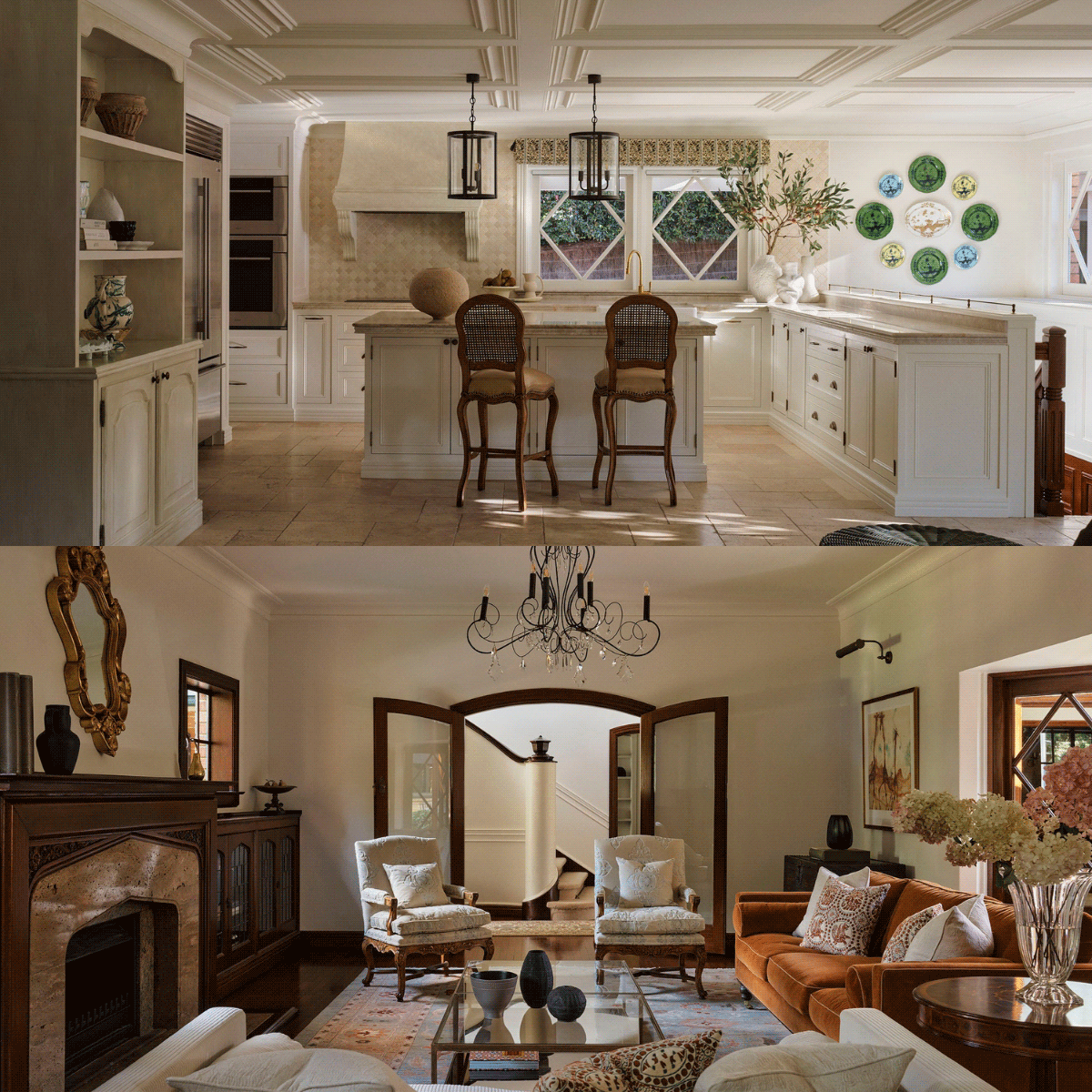
There is something very special about working with a heritage home. Its original details provide a sense of history and permanence – the starting point for a new chapter, rather than something to be replicated exactly.
For this private Eastern Suburbs terrace, the brief was to honour the home’s character while creating an interior that felt comfortable, practical and personal. The result is a layered composition of old and new: traditional detailing and tactile materials sit alongside a more relaxed approach to colour, pattern and everyday living.
Rather than revealing the home in its entirety, we wanted to share some of the details that helped shape its character.
A considered palette
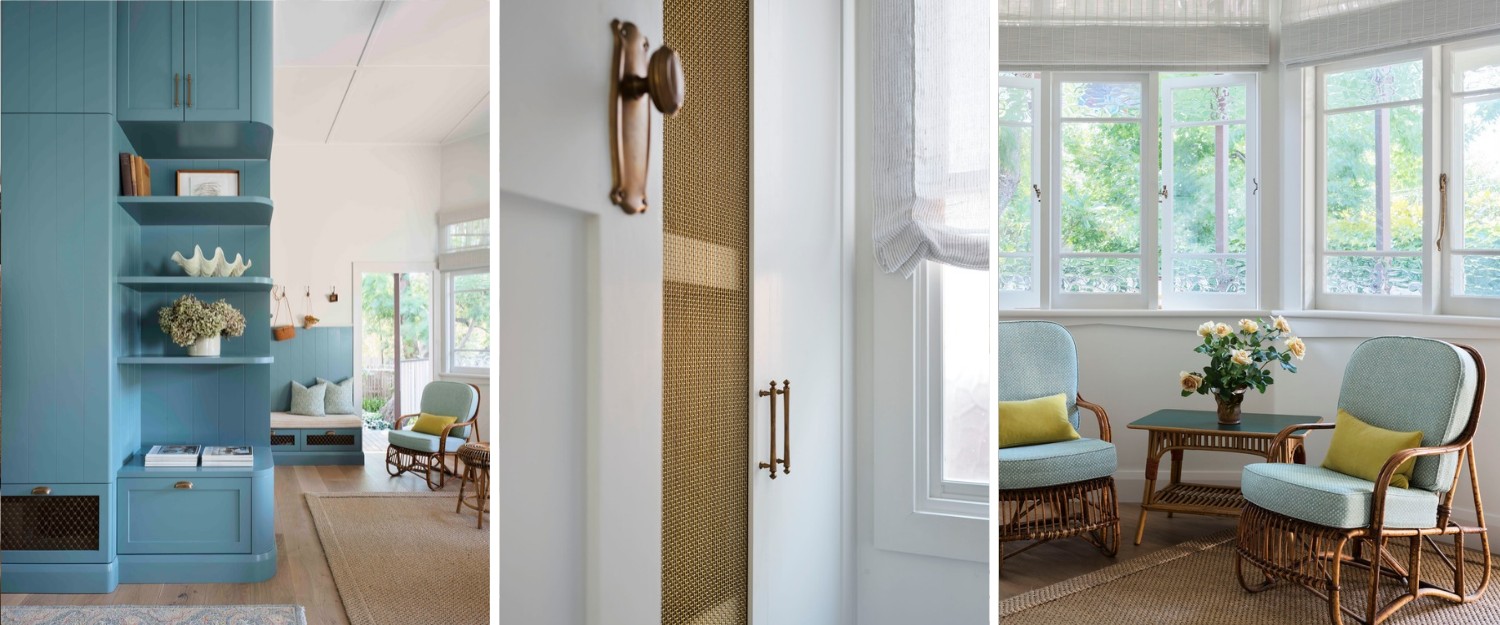
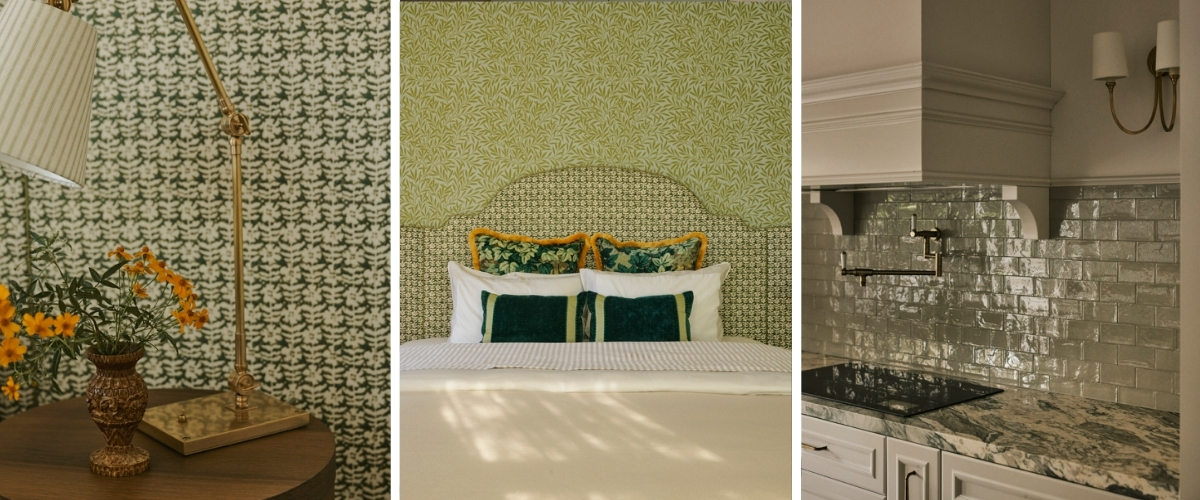
Colour was integral to the feeling of this home. We worked with a palette of olive and moss greens, soft creams, deep blues, warm timbers and aged brass – tones that feel at ease within a heritage setting, while still bringing freshness and personality to the interiors.
The same green appears in different ways throughout the house: in the variation of the glazed wall tiles, in the leafy wallpaper, and in the patterned fabrics chosen for the bedrooms. Repeating a colour in this way creates a subtle thread between rooms, without making the scheme feel too matched or prescribed.
I have always felt that colour is most successful when it is part of a wider conversation. It should relate not only to paint or fabric, but to the light in a room, the material underfoot, the timber of the joinery and the life that will unfold around it.
The character of wallpaper
Wallpaper has a wonderful ability to change the mood of a room. It introduces pattern and movement, but it can also bring an intimacy that paint alone rarely achieves.
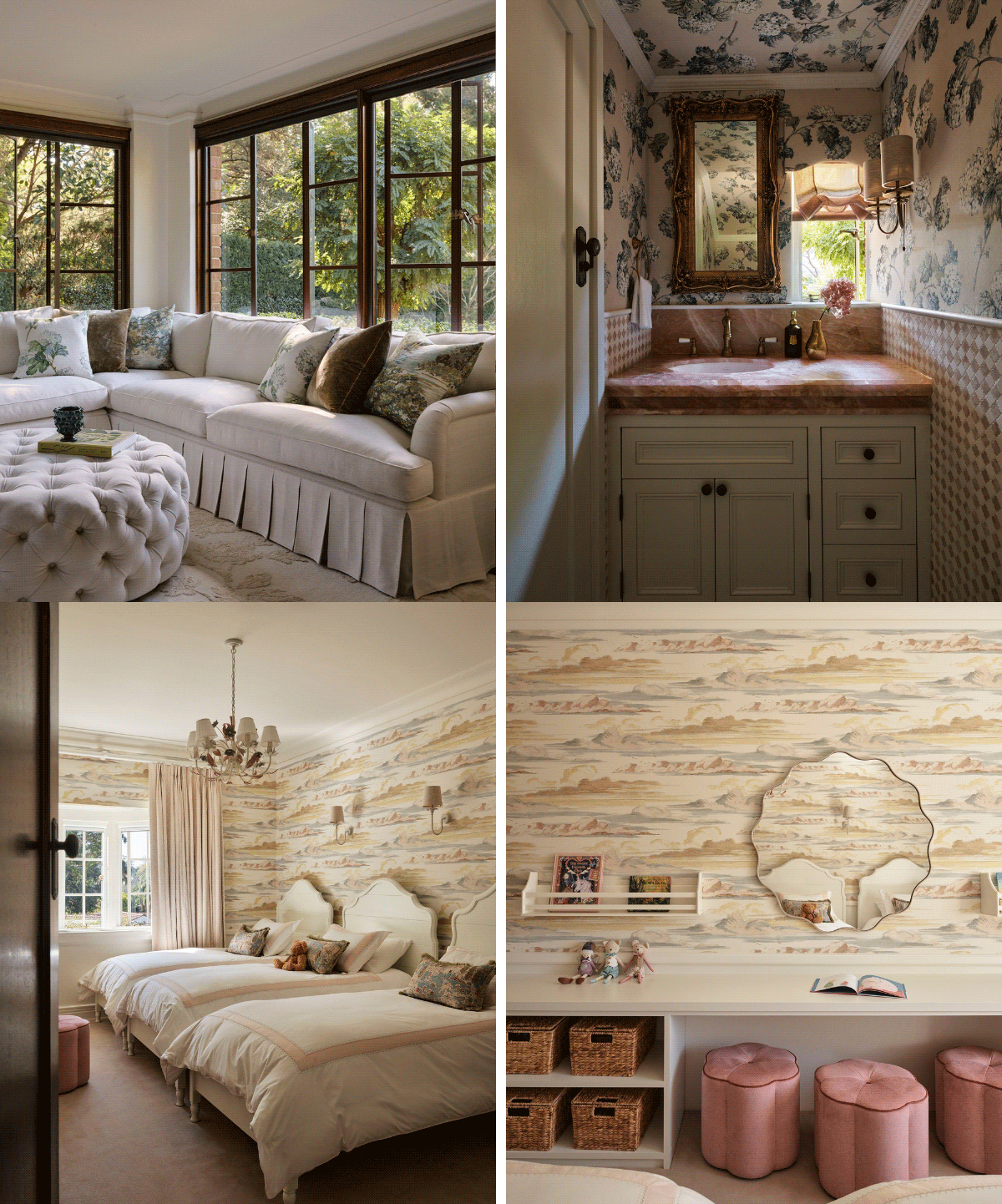
In this home, botanical wallcoverings were used to soften bedrooms, the laundry and smaller moments throughout the house. The leafy patterns create a gentle sense of rhythm, complementing the heritage architecture while giving the rooms a more relaxed, lived-in quality.
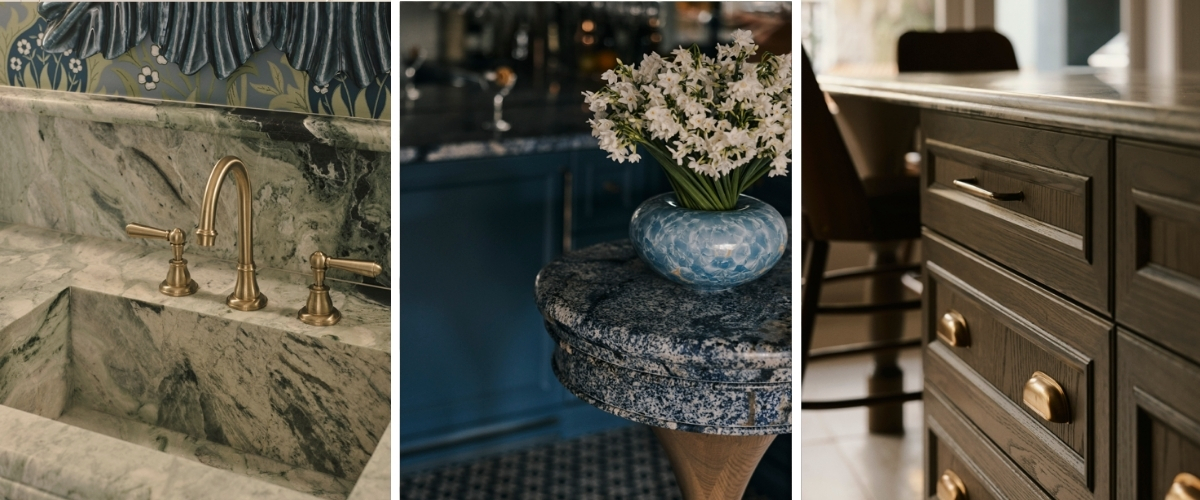
In the powder room, we took a more expressive approach. Deep blue joinery, green-veined stone and a richly patterned wallpaper come together to create a small but memorable space. This is often where wallpaper is at its most effective: in rooms that are passed through every day, but where a little more theatre can be enjoyed.
Used thoughtfully, wallpaper need not feel overly decorative. It can be a way of bringing depth and individuality to an interior, while also connecting it to the traditions of an older home.
Comfort in the details
For me, a bedroom should always feel like a retreat. It is one of the few rooms in a house where comfort can be given real priority – not only through softness, but through proportion, texture and the way materials are layered.
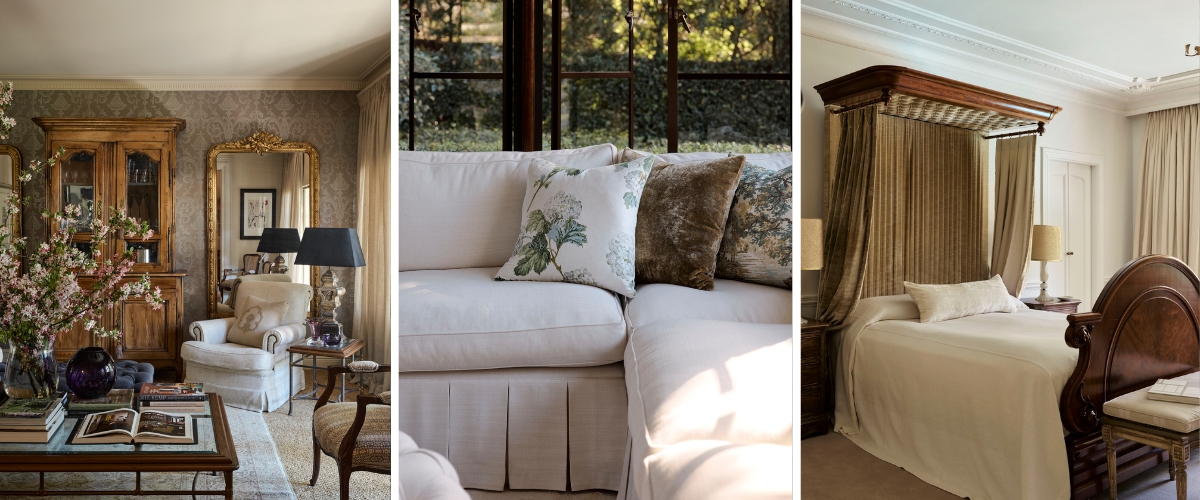
The custom upholstered bedheads, a patterned feature wall and luxurious fabric with contrast piping bring definition and detail. Cushions in deeper greens and floral tones add another layer, creating a retreat that feels generous and inviting without becoming overly formal.
Bespoke upholstery is one of the most rewarding parts of an interior because it allows a room to be resolved precisely. It offers the opportunity to consider scale, silhouette, fabric and trim together, so that a piece feels entirely at home in its setting.
Materials with permanence
The material palette was chosen to feel enduring, tactile and appropriate to the home’s heritage bones.
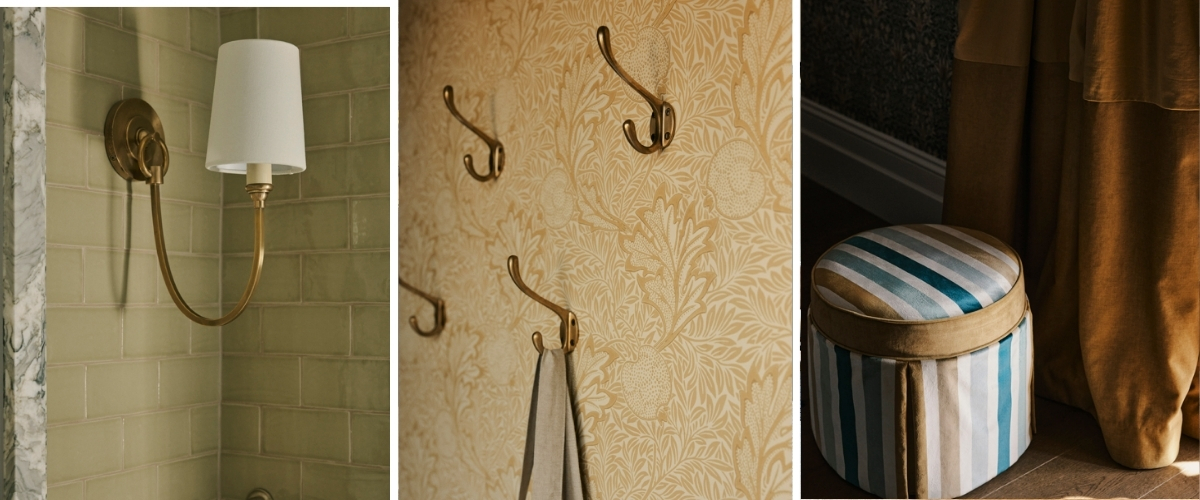
Glossy olive tiles bring a hand-finished quality to the kitchen and bathrooms, their slight variation catching the light throughout the day. Green-veined stone adds a sense of drama and substance, while aged brass fittings and lighting introduce warmth that will only deepen over time.
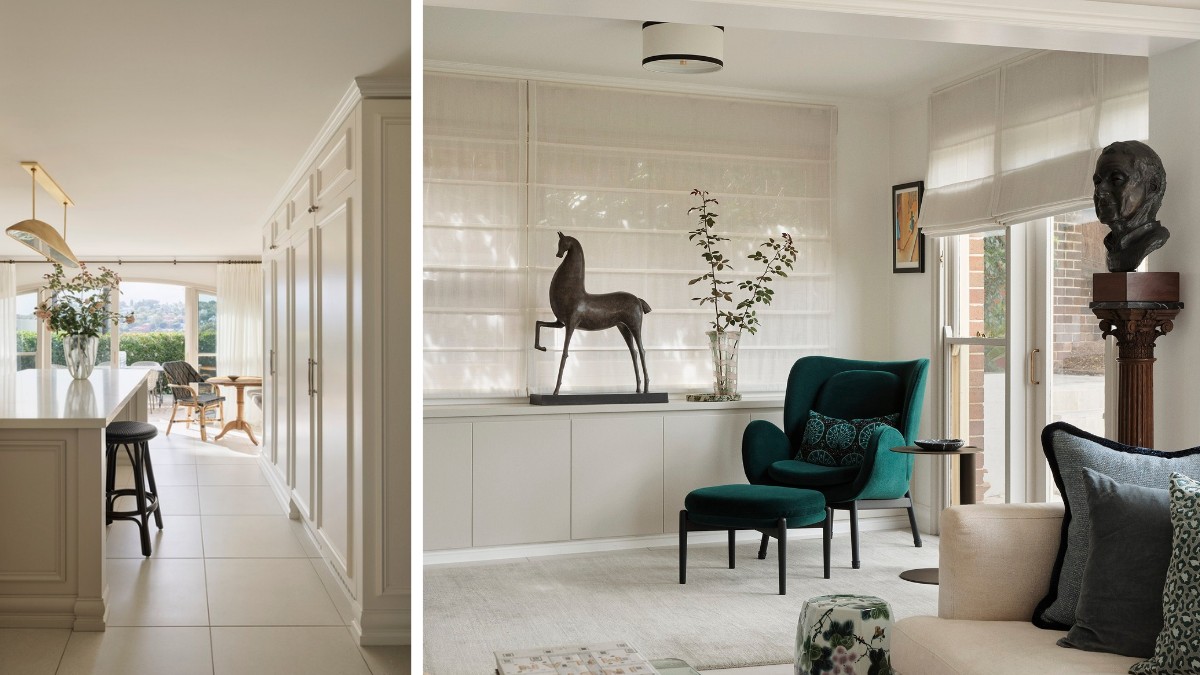
Elsewhere, dark-stained timber joinery, traditional framed cabinetry and carefully selected hardware bring a sense of craft and weight to the more contemporary elements of the renovation. The turned timber detail at the kitchen island is a small gesture, but one that gives the room a more individual, furniture-like quality.
I believe these are the details that matter. A handle held every day, the curve of a wall light, the edge profile of a stone benchtop, or the fall of a curtain can all influence how a home feels to live in.
A home that feels collected
The most successful heritage renovations do not attempt to freeze a house in time. They respect the architecture and craftsmanship that came before, while allowing a home to respond to the needs and rhythms of the people living there now.
For this eastern suburbs terrace, that meant retaining a sense of character while introducing colour, pattern, texture and comfort in a way that felt natural to the house. The finished interiors are layered rather than literal; expressive but calm; and designed to feel even more settled with time.